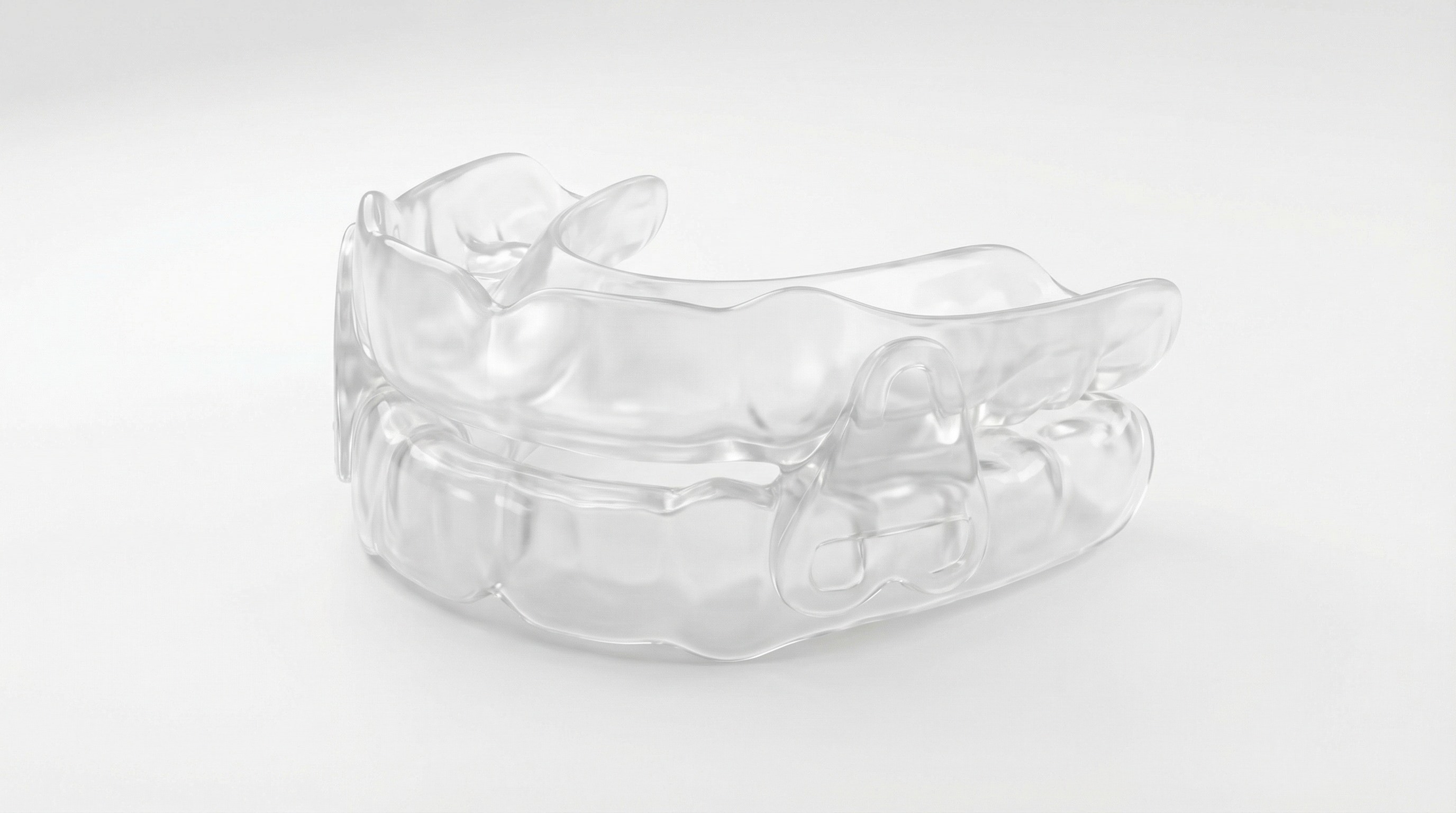
Living with sleep apnea doesn't have to mean wrestling with masks, hoses, and noisy machines every night.
What Are Oral Appliances for Sleep Apnea?
An oral appliance is a custom-made mouthpiece resembling a sports guard or retainer. The device fits over your teeth and repositions the lower jaw forward by millimeters during sleep, preventing throat tissue collapse and maintaining airway patency.
Medical-grade devices are precision-crafted from durable acrylic using digital impressions from dentists trained in dental sleep medicine. Professional fitting and ongoing adjustments remain essential for safety and effectiveness — generic approaches don't work for obstructive sleep apnea treatment.
Why Choose Oral Appliances Over CPAP Machines?
CPAP therapy remains the gold standard for severe sleep apnea, yet many patients struggle with compliance due to discomfort, claustrophobia, or lifestyle obstacles.
Comfort and Convenience
- No masks or hoses required
- Silent operation without motor noise
- Travel-friendly without electricity needs
- Simple maintenance using toothbrush and mild soap
Higher Compliance Rates
Studies demonstrate patients use oral appliances more consistently than CPAP machines. The device feels natural after a brief adjustment period, eliminating the feeling of being tethered to a nightstand.
Lifestyle Benefits
- Bedroom peace for partners
- Spontaneity without setup hassles
- Enhanced confidence
- Possible reduction in teeth grinding and TMJ discomfort
How Effective Are Oral Appliances for Sleep Apnea?
Clinical evidence supports oral appliance therapy as highly effective treatment. Research shows success rates of 70–90 percent when devices are properly fitted and regularly monitored by qualified professionals.
Mild to Moderate Cases
Devices typically reduce the apnea-hypopnea index (AHI) by 50–80 percent, often achieving complete symptom resolution with improved oxygen saturation and restored daytime energy.
Severe Sleep Apnea
While CPAP remains first-line therapy for severe cases, oral appliances can provide meaningful improvement for CPAP-intolerant patients. Partial AHI reduction often translates to better blood-oxygen levels and reduced cardiovascular strain.
The Fitting Process
- Diagnosis via sleep study confirming obstructive sleep apnea
- Digital impressions creating precise 3D scans
- Custom fabrication using medical-grade materials
- Initial fitting establishing starting jaw position
- Titration appointments for gradual adjustments
- Follow-up testing confirming treatment effectiveness
Who Is a Good Candidate?
Oral appliances work best for patients with:
- Mild to moderate obstructive sleep apnea (AHI 5–30 events/hour)
- CPAP intolerance with documented difficulty
- Positional sleep apnea
- Healthy teeth and gums with adequate dentition
- Functional TMJ without significant pain
Even severe sleep apnea patients may qualify if CPAP isn't medically viable. Our interdisciplinary team evaluates each situation to recommend the most appropriate treatment path.
Getting Started at real sleep in Columbus
Our Columbus office at 230 W Johnstown Rd offers at-home sleep testing, expert consultation with sleep medicine specialists, custom oral appliance fabrication, and ongoing support through follow-up appointments.
Frequently Asked Questions
How long does it take to adapt?
Most patients adapt within 1–2 weeks. You may experience temporary jaw soreness or excess salivation initially, but these effects typically resolve quickly.
Will insurance cover it?
Many medical insurance plans cover oral appliances when deemed medically necessary and prescribed by physicians. Documentation of sleep study diagnosis and sometimes CPAP intolerance proof is required. Our practice assists with insurance authorization.
What if the oral appliance doesn't work?
Success rates are high, but therapy isn't effective for everyone. Follow-up sleep testing showing inadequate improvement may lead to combination therapy recommendations or CPAP revisiting.
Sleep apnea robs you of energy, focus, and long-term health — but treatment doesn't have to feel like a burden.